
Take It Literally. Change the Meaning.
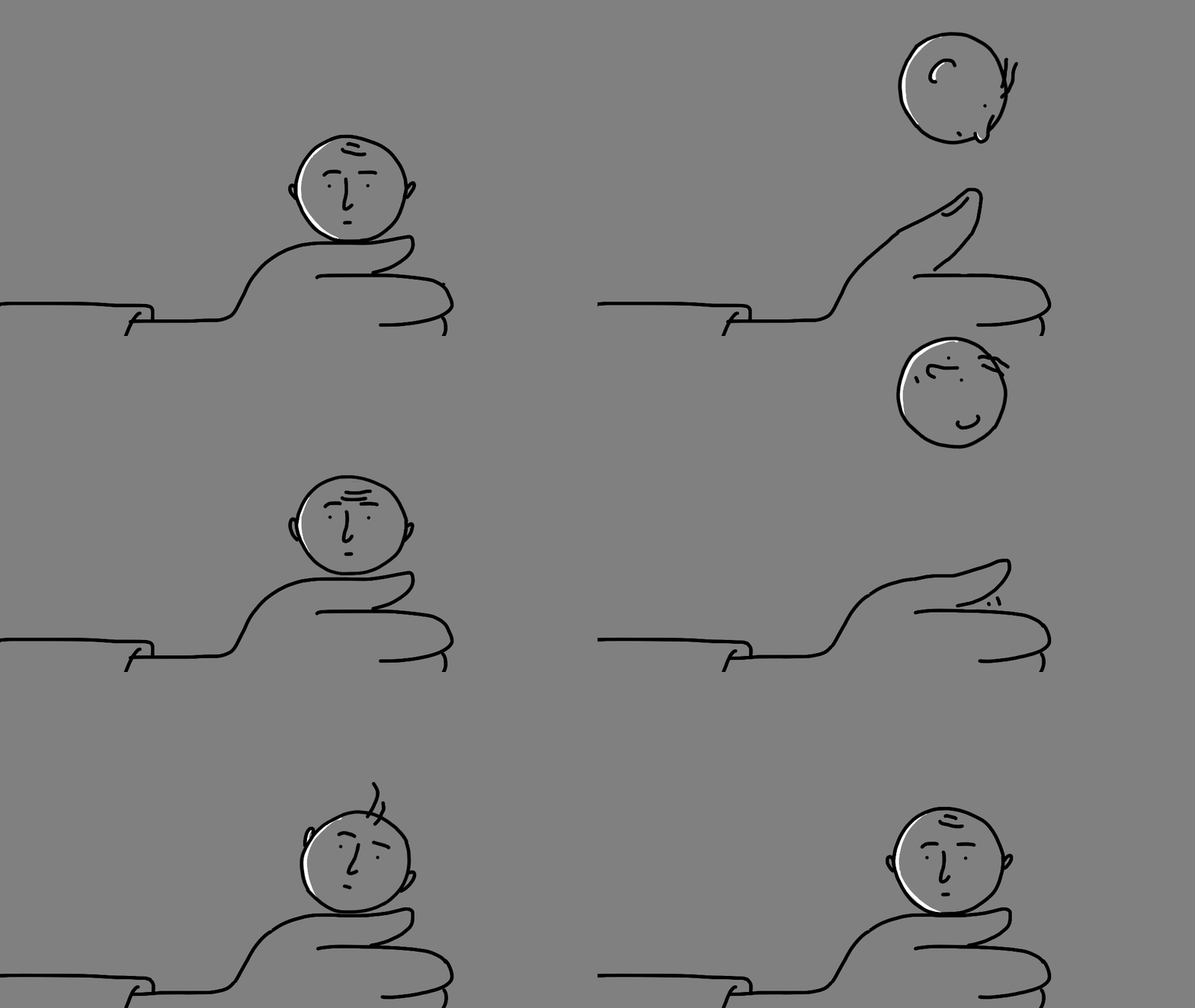
INKTOBER DAY 13: TOSS
New ideas often begin with an association.
One word leads to another.
And sometimes, a simple word association can become a visual metaphor.
Think about tossing a coin to make a decision.
Heads or tails?
Now, let's focus on the word HEADS.
What if we take it literally?
Instead of drawing a coin with a head on it, we replace the entire coin with an actual head.
Now we have a visual metaphor.
But there's something else going on here.
When you toss a coin, you expect an unpredictable result.
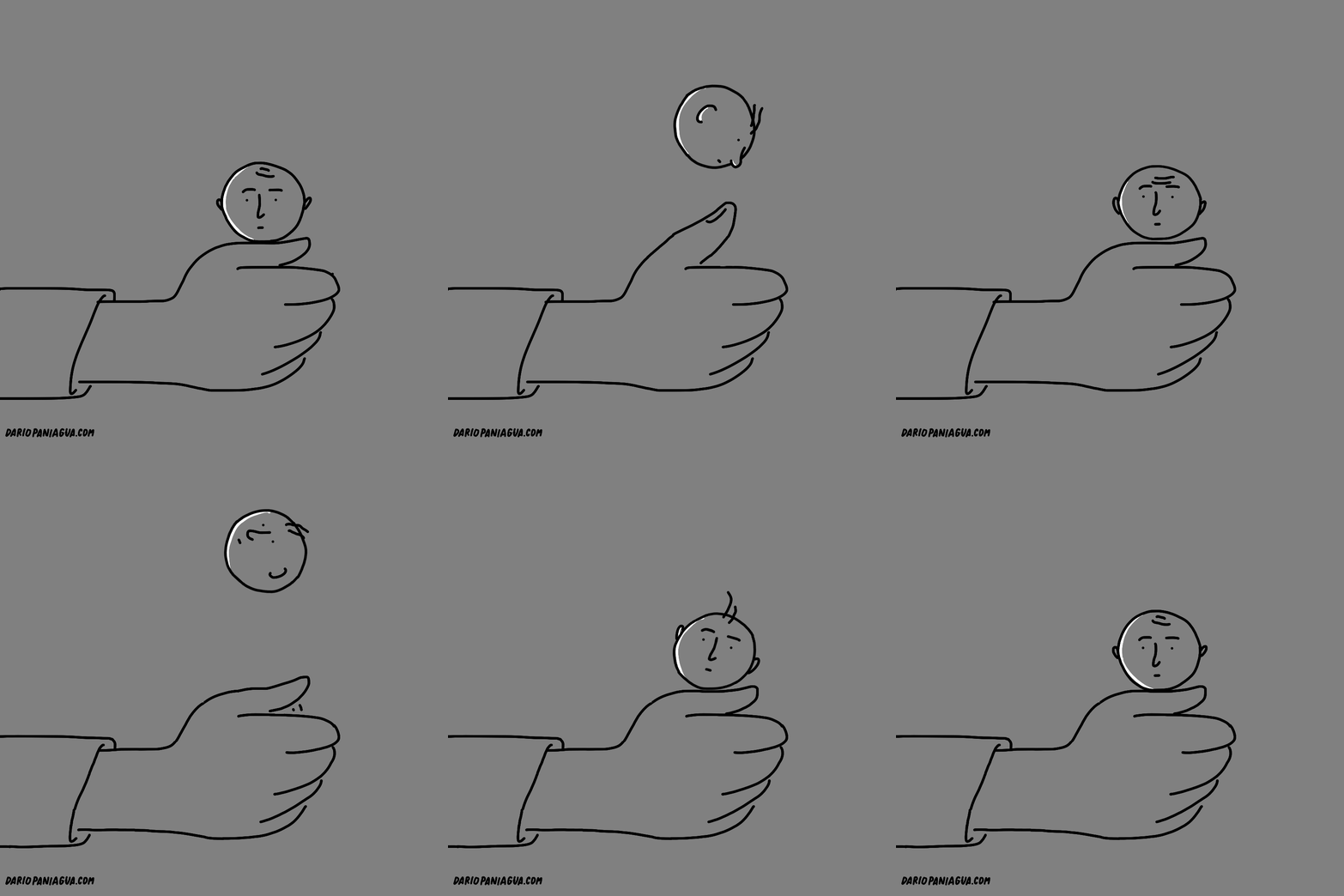
Heads or tails?
But what happens when you replace the coin with a head?
It's always heads!
We've taken something designed to leave the outcome to chance and turned it into something completely predictable.
That's what I love about this kind of visual thinking.
A simple association can do more than create an unexpected image.
It can change the meaning of the whole situation.
So today's tip:
Follow a word association. Take it literally. Then see ho...
Ask a Better Question. Find a Better Metaphor.
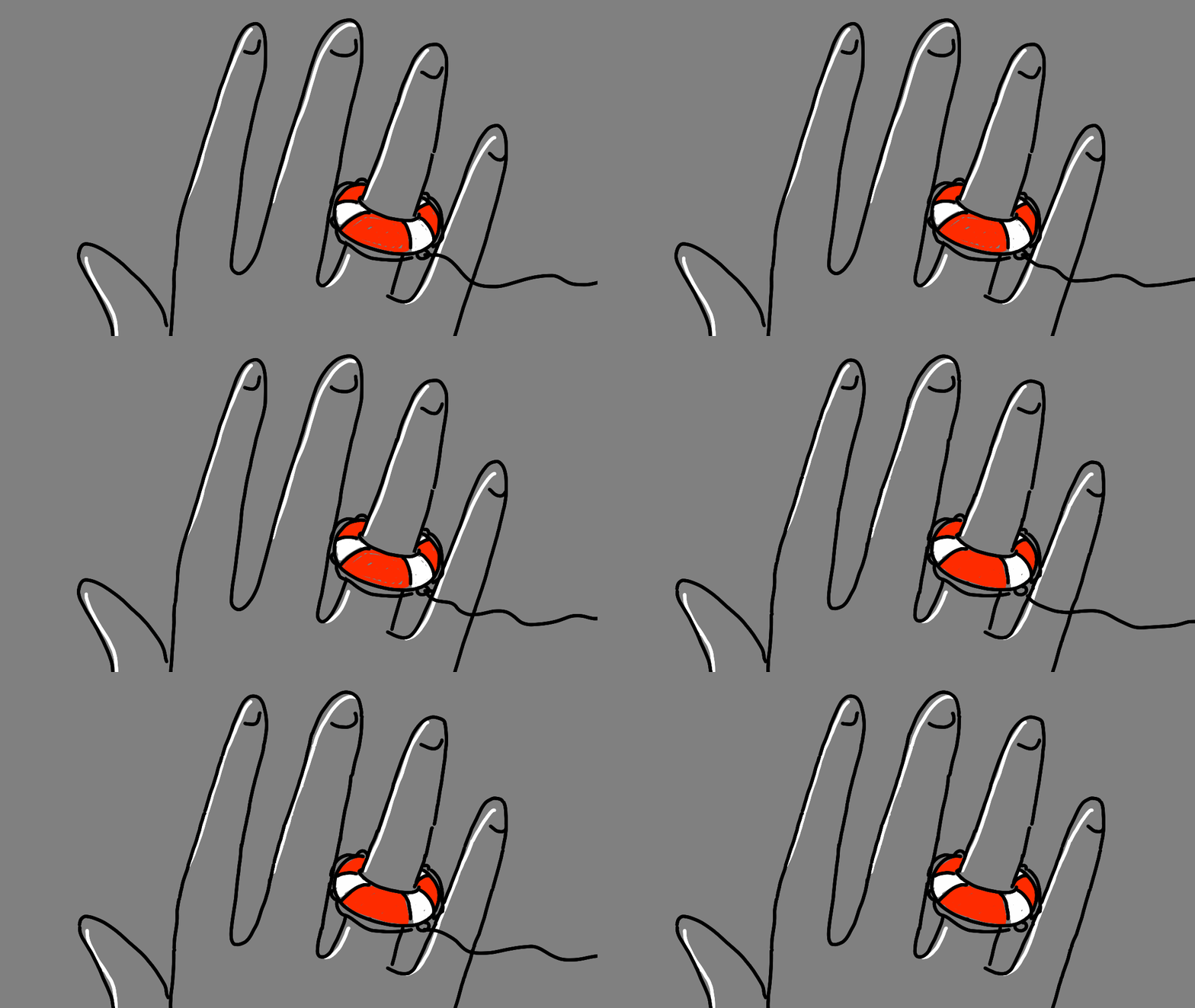
INKTOBER DAY 12: RESCUE
When you have to represent an action, ask yourself a simple question:
RESCUE… WHO?
A person?
An animal?
A relationship?
One simple question can open up a whole world of visual possibilities.
But how do we turn one of those possibilities into an image?
By making connections.
Look at a ring.Its round, and it has a hole in the middle.
What else has the same shape?
A lifebuoy!
So why not replace the ring with a lifebuoy?
Now we have a visual metaphor
And if we go back to our first question…
Who are we rescuing? Well, this image might give you an idea :)
This is one of my favorite ways to create visual metaphors: find a connection between two things, then replace one with the other.
And sometimes, one small detail can help the whole idea stand out.
Thats why the lifebuoy is the only colored element in this drawing.
So todays tip:
Ask a better question.
Find a visual connection.
Replace the expected.
And see where it takes you.
Put the Metaphor Inside
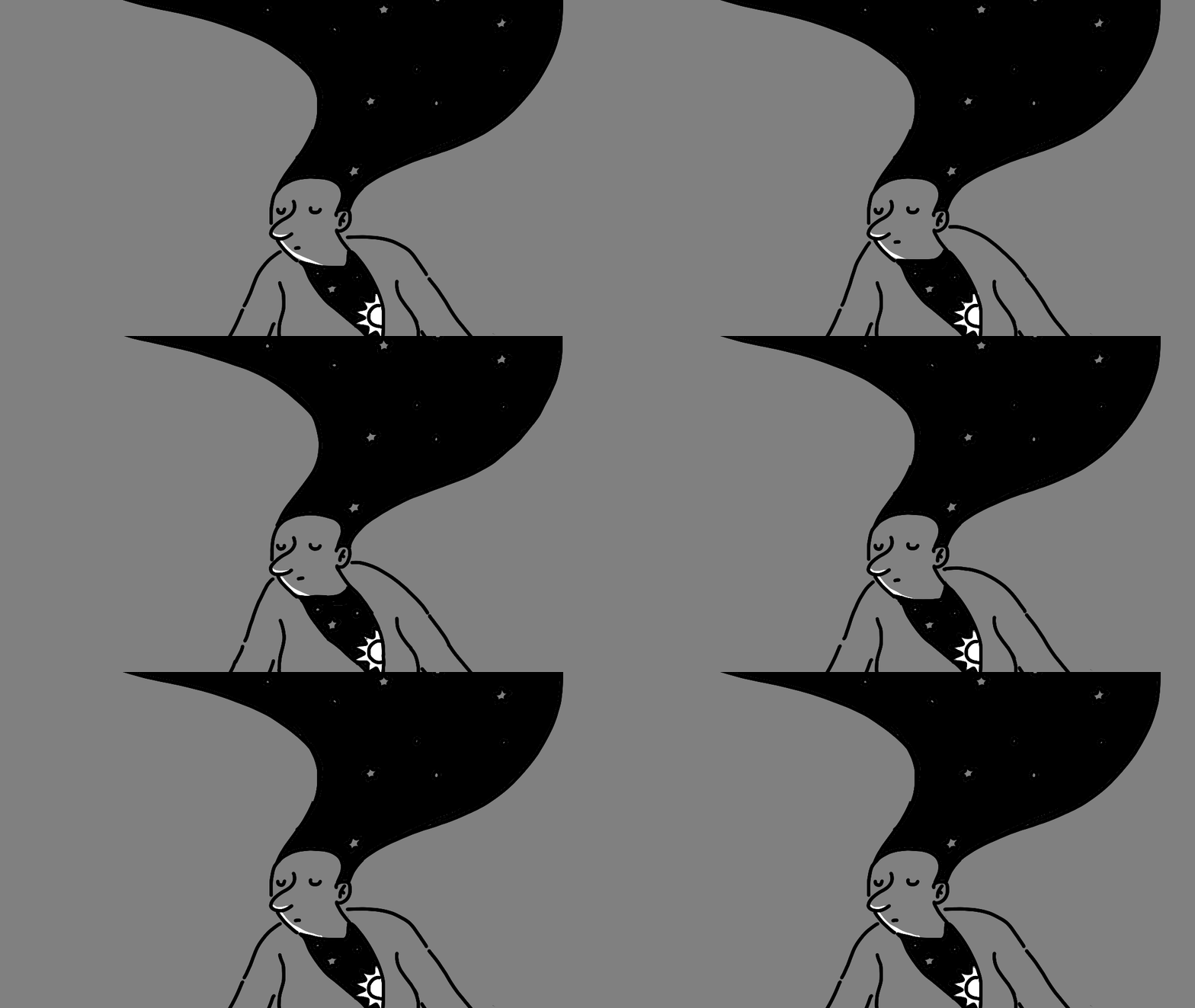
INKTOBER DAY 11: MYSTICAL
How do you visually represent something mystical?
We can always start with something we can see.
A person meditating.
Someone praying.
Someone contemplating.
But these are only the visible actions.
What about everything that happens inside?
Mystical and spiritual experiences are often about something we cannot see or touch.
So how can we give that invisible world a visual form?
One way is to use the person as a container.In this image, the womans hair becomes a shape.
And inside that shape, there is an entire universe.
The universe is not outside her.Its inside.
The shape becomes a container for something we normally cannot see.
And this can be useful for many abstract ideas.
Instead of putting the meaning around the person, try putting it inside them.
So todays tip:
When an idea happens inside, try putting the metaphor inside too.
Don’t Show What It Produces. Show What It Represents.
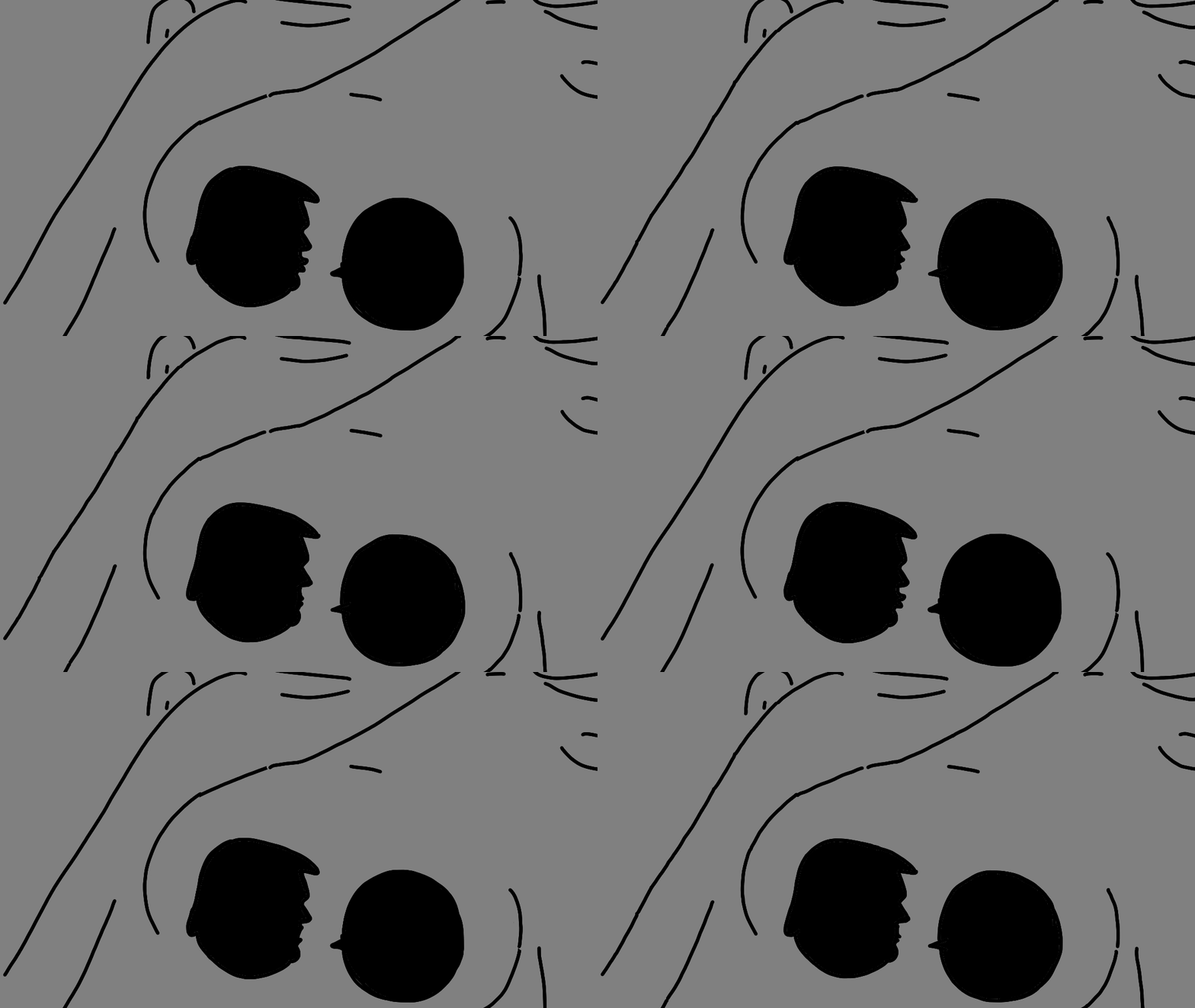
INKTOBER DAY 8: STINKY
When something smells bad, we don't always have to show the smell.
We can show what the smell represents.
A smell can be so strong that it almost takes a shape.
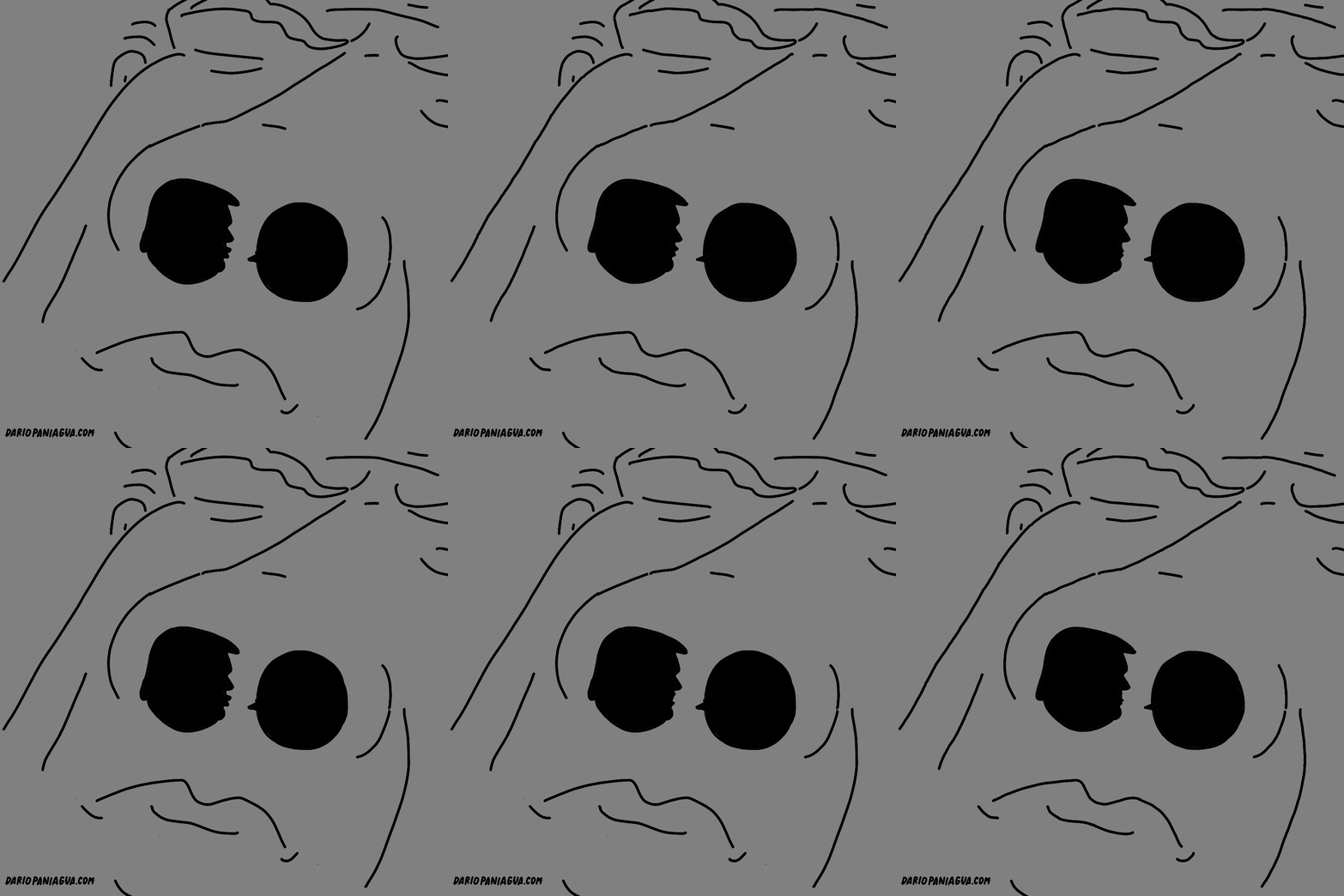
So instead of drawing something that produces a bad smell, I tried something more subtle.
I used the nose itself.
We expect to see two dark holes.
But what if we replace what normally belongs inside them?
One hole becomes a silhouette.
The other becomes a speech bubble.
Now the holes are no longer just holes.
They become part of the message.
This is one of the things I love about working with holes in visual metaphors.
A hole is an empty space.
But when we change what we expect to find inside it, that empty space can become something else.
And suddenly, something that was supposed to be invisible becomes visible.
So today's tip:
Don't always show what something produces. Show what it represents.
And sometimes, if the smell is strong enough…
give it a shape.
Don’t Just Show the Emotion. Show What It Causes.
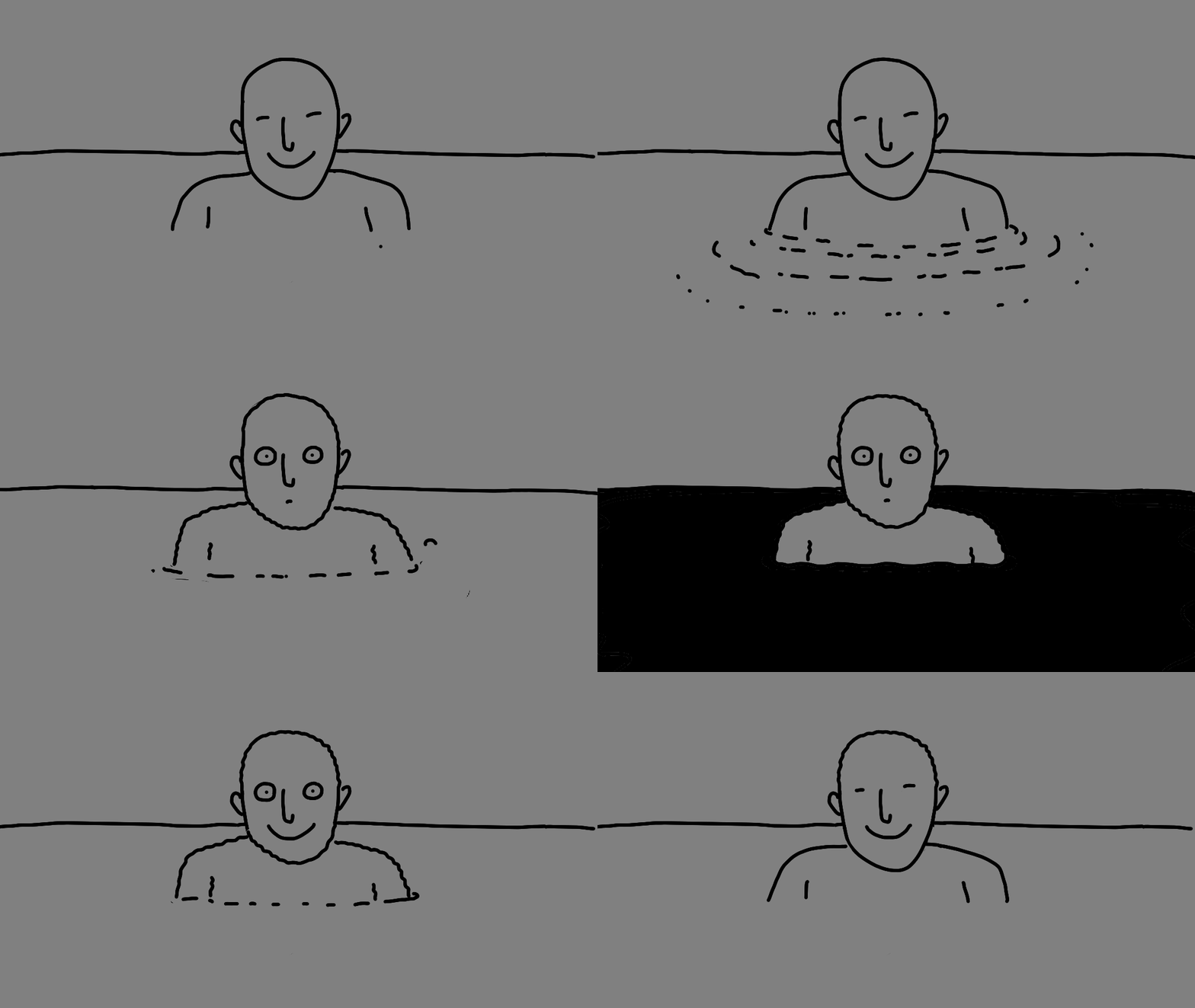
When we want to represent an emotion, we usually start with the person experiencing it.
Panic can be easy to recognize.
Wide eyes.
Tension.
Shaking.
Fast breathing.
These details can be enough to tell us what someone is feeling.
But we can go one step further.
Instead of only showing the emotion, we can show what the emotion causes.
What happens to the person because they are panicking?
And what happens next?
This can create a chain of meaning:
The person sees the shark.
The person panics.
And because they panic… something else happens.
Sometimes that extra consequence can also bring humor into the story.
Not every uncomfortable or frightening situation needs to be represented in a dramatic way.
A small unexpected detail can completely change the tone.
So today's tip:
Don't just show what someone feels. Show what happens because they feel it.
Give the Invisible a Shape
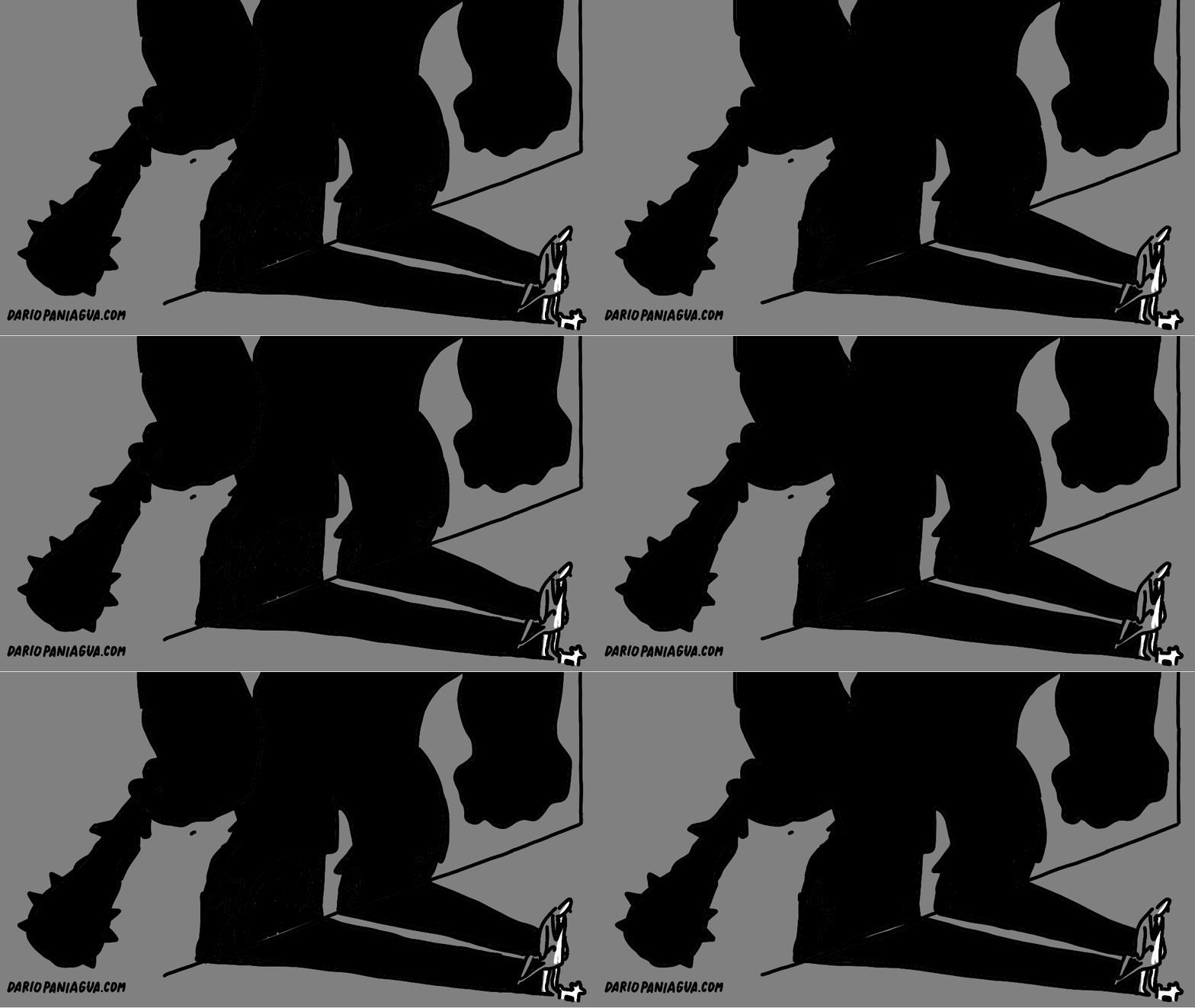
Fantasy doesn't always need to live in a fantasy world.
Even the most monstrous or mythical creature can be brought into our everyday reality.
A completely ordinary person, someone we might not even notice during the day, could be hiding something very different underneath.
Anger.
Violence.
Fear.
Or something much darker.
And the same can happen with animals.
A harmless little dog can become a dangerous wolf.
This is where shadows and negative space can become very powerful tools.
They allow us to show something that isn't actually there.
We cannot see someone's personality.
We cannot touch their fears, their anger or their intentions.
But we can give these invisible things a physical form.
A shadow is also something we cannot touch.
And yet, it can make something abstract feel real.
So today's tip:
When you want to show something invisible, don't always draw it directly. Give it a shape.
Don’t Just Draw the Action. Draw the Consequence.
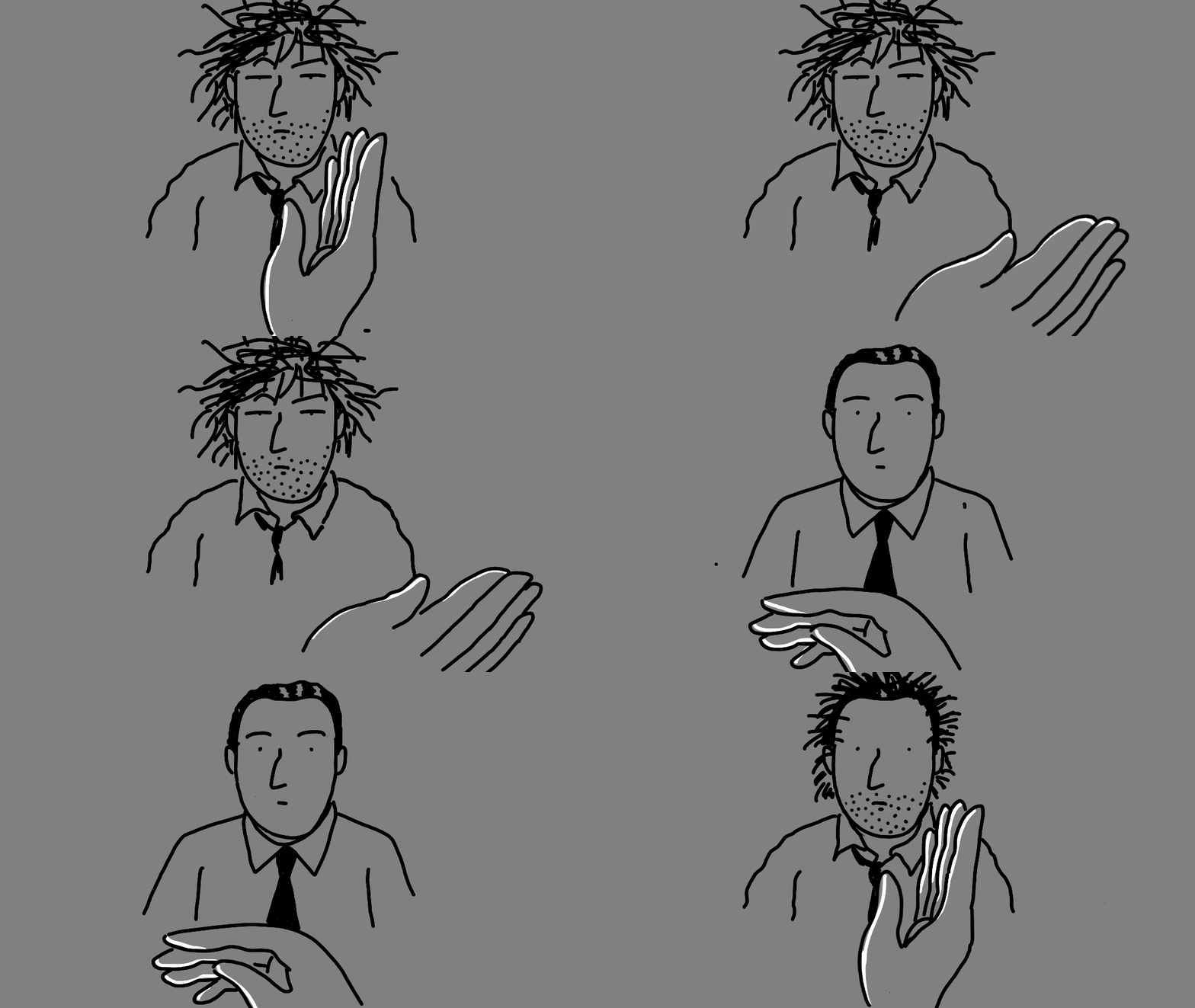
INKTOBER DAY 4: SMACK
When we have to draw an action, we usually think about the movement.
Someone hits something.
Someone throws something.
Someone pushes something.
But what if we focus on what happens after the action?
What does the action change?
How does it transform the thing we act upon?
And can that transformation be unexpected?
A smack usually has a very clear consequence.
Pain.
Damage.
Anger.
But what if the smack does something completely different?
What if instead of hurting someone, it 'fixes' them, or encourage them in some way?
This is another way to create disruption:
Don't just change the action. Change the consequence people expect from it.
And the transformation doesn't always have to be negative.
Sometimes the most interesting transformation is the one we never expected to see.
So today's tip:
Don't just draw the action. Draw the unexpected consequence.
Don’t Always Explain Your Absurdity
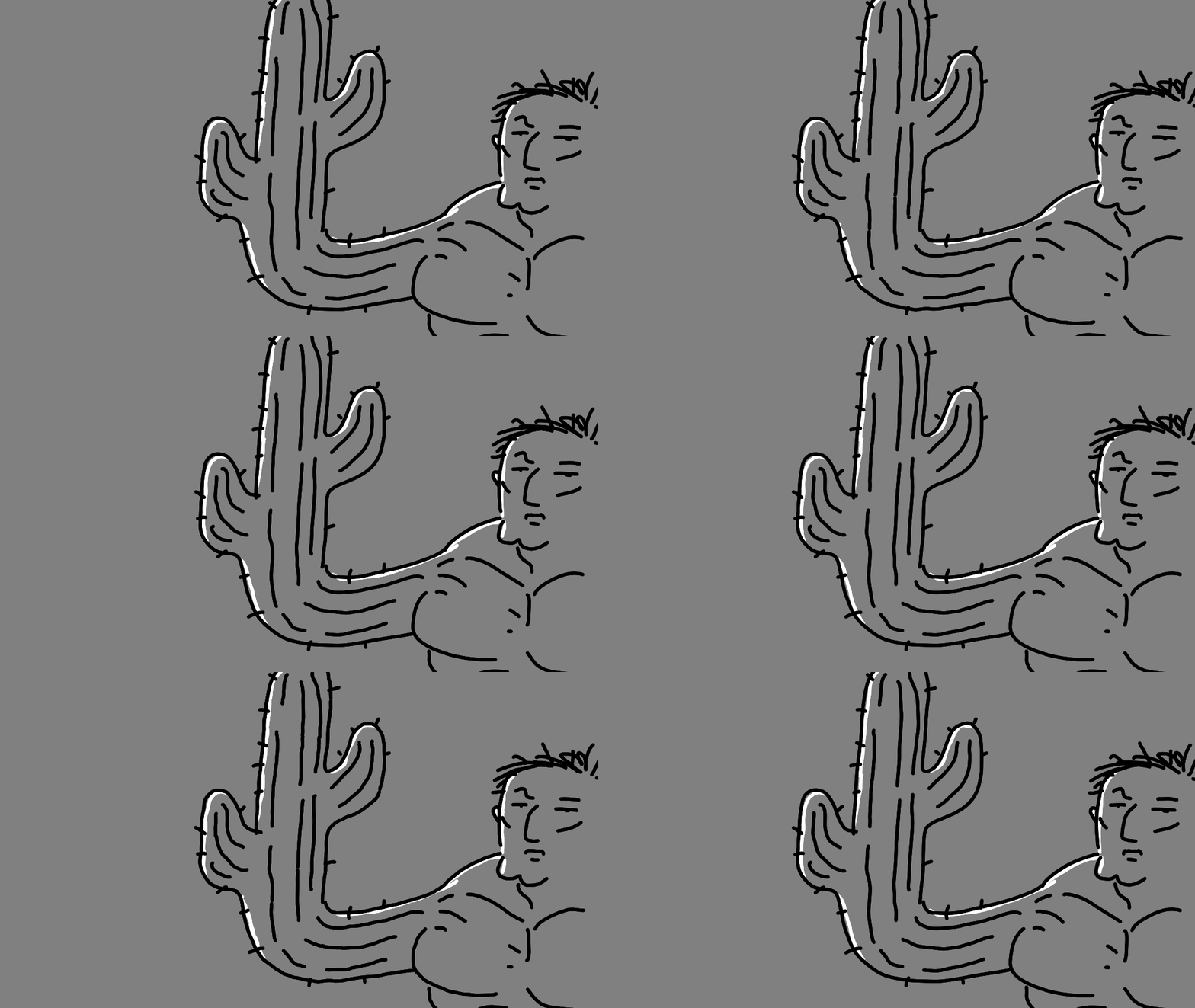
Say something without saying it.
Sometimes we create an absurd image without giving it a very specific meaning.
And then something interesting happens.
Our audience starts creating meanings for us.
This is one of the things I love about blending.
When we fuse two completely different things together, we create something that doesn't exist in the real world.
And because it doesn't exist, there is no single, obvious meaning attached to it.
The viewer has to complete the image.
They use their own culture, experiences, memories and imagination to decide what they are looking at.
And that means two people can look at exactly the same absurd image and see completely different things.
Sometimes we don't even realize all the meanings our image can suggest.
We may think:
“It's just a weird idea.”
But someone else might see something very specific.
And that's the beauty of absurdity.
You don't always have to explain everything.
Sometimes the less you say, the more space you g...
Don’t Use Size Just to Show Size
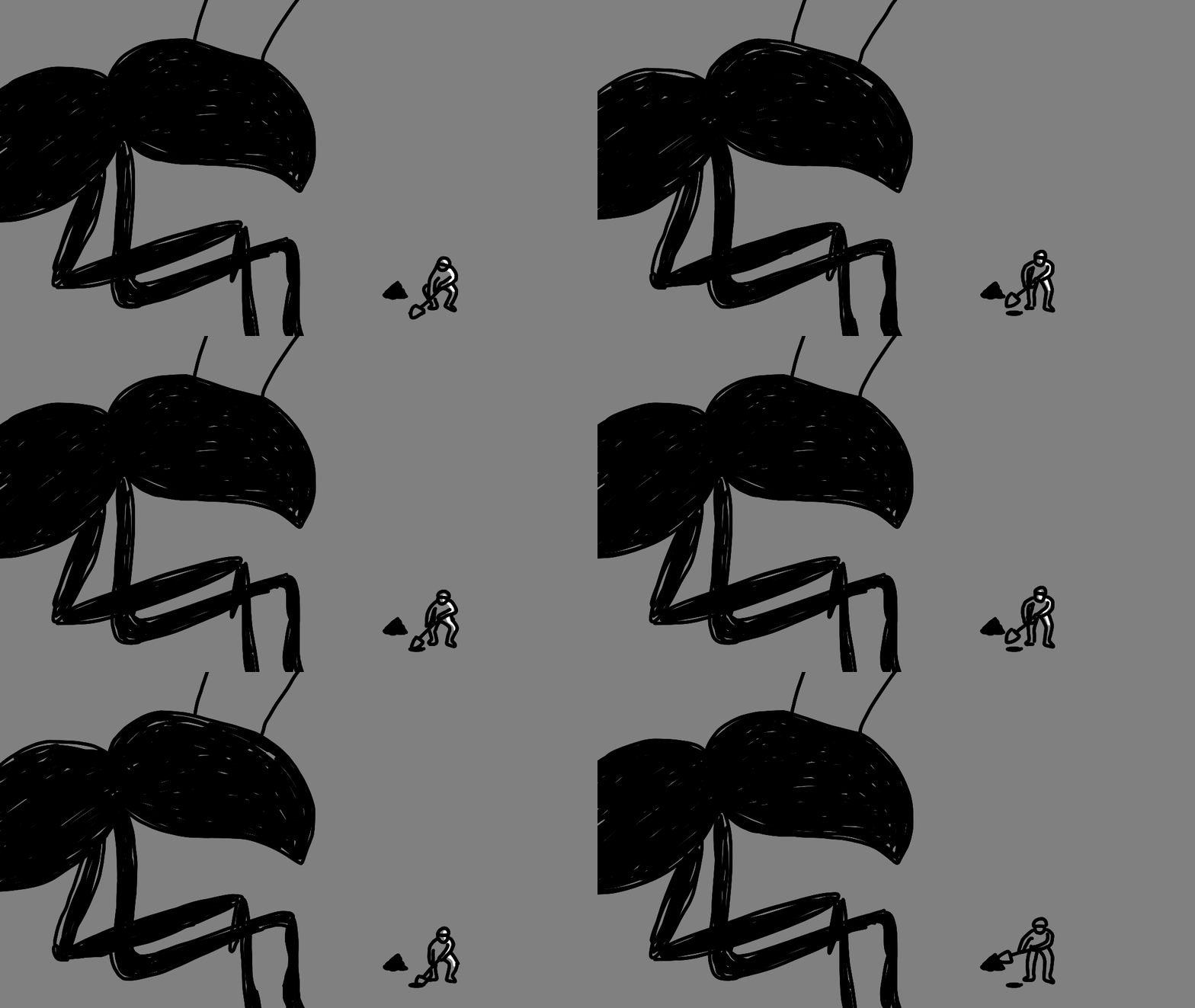
INKTOBER DAY 3: MINIATURE
When you make something smaller, you are not only communicating size.
You are communicating hierarchy.
The disruptive way to play with hierarchy is to make something your audience expects to see big… small.
Something they expect to see high… low.
But there is one important thing:You need a reference.
If everything is small, we dont really understand what “small” means.
We need another element to create the contrast.
And this is where things get interesting.
The big element has a meaning.
The small element has another meaning.
And the relationship between them creates a third meaning.
Then you can add even more layers.
What are they doing?
What are they wearing?
Where are they?
What is happening around them?
Every one of these choices can add meaning to the story.
So when you change the size of something, dont just ask:“How can I make this bigger or smaller?”
Ask:“What happens to the meaning when I change its place in the hierarchy?”
Thats today's tip: Dont use size just to show ...
Sometimes, the concept you need to communicate needs a comparison.
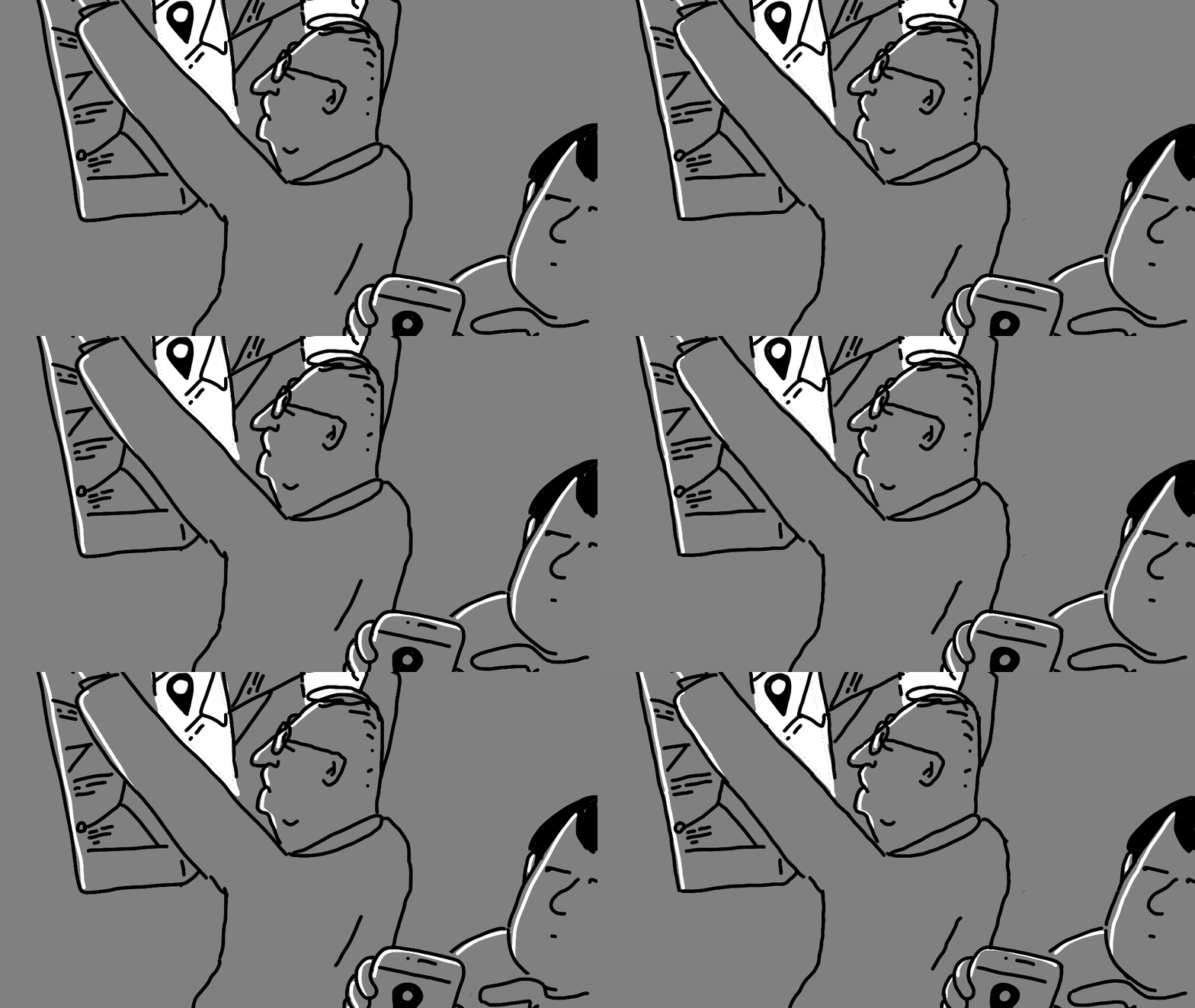
INKTOBER DAY 2: RELIC
A paper map is just a paper map.
But put it next to a smartphone with Google Maps…
Suddenly, the paper map becomes a relic.
When we compare two things, we automatically create a hierarchy between them.
We start seeing one as old and the other as new.
One as slow and the other as fast.
One as obsolete and the other as current.
But we don’t necessarily see these relationships when we look at each object on its own.
The comparison can be very simple:
One object next to another.
Or you can create a whole story around the comparison.
But remember: The more details you add to a scene, the longer it takes to decode.
So always ask yourself:
How much time will my audience have to look at this?
And design your visual accordingly.
If you want to learn more about visual metaphors and use them to strengthen your creativity, my Visual Thinking membership is open.
Use INK2026 for the special October discount.
