
Give the Invisible a Shape
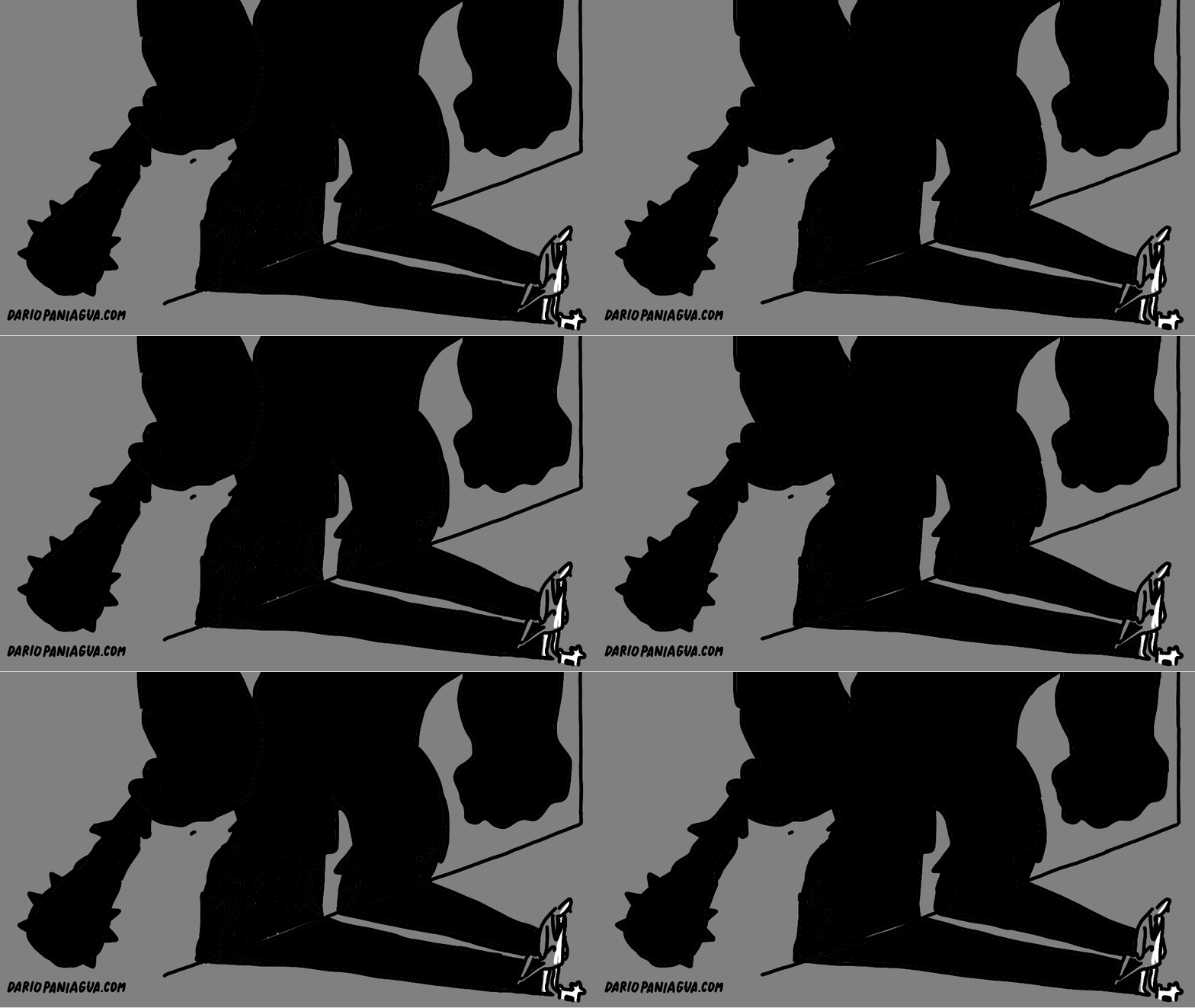
Fantasy doesn't always need to live in a fantasy world.
Even the most monstrous or mythical creature can be brought into our everyday reality.
A completely ordinary person, someone we might not even notice during the day, could be hiding something very different underneath.
Anger.
Violence.
Fear.
Or something much darker.
And the same can happen with animals.
A harmless little dog can become a dangerous wolf.
This is where shadows and negative space can become very powerful tools.
They allow us to show something that isn't actually there.
We cannot see someone's personality.
We cannot touch their fears, their anger or their intentions.
But we can give these invisible things a physical form.
A shadow is also something we cannot touch.
And yet, it can make something abstract feel real.
So today's tip:
When you want to show something invisible, don't always draw it directly. Give it a shape.
Don’t Just Draw the Action. Draw the Consequence.
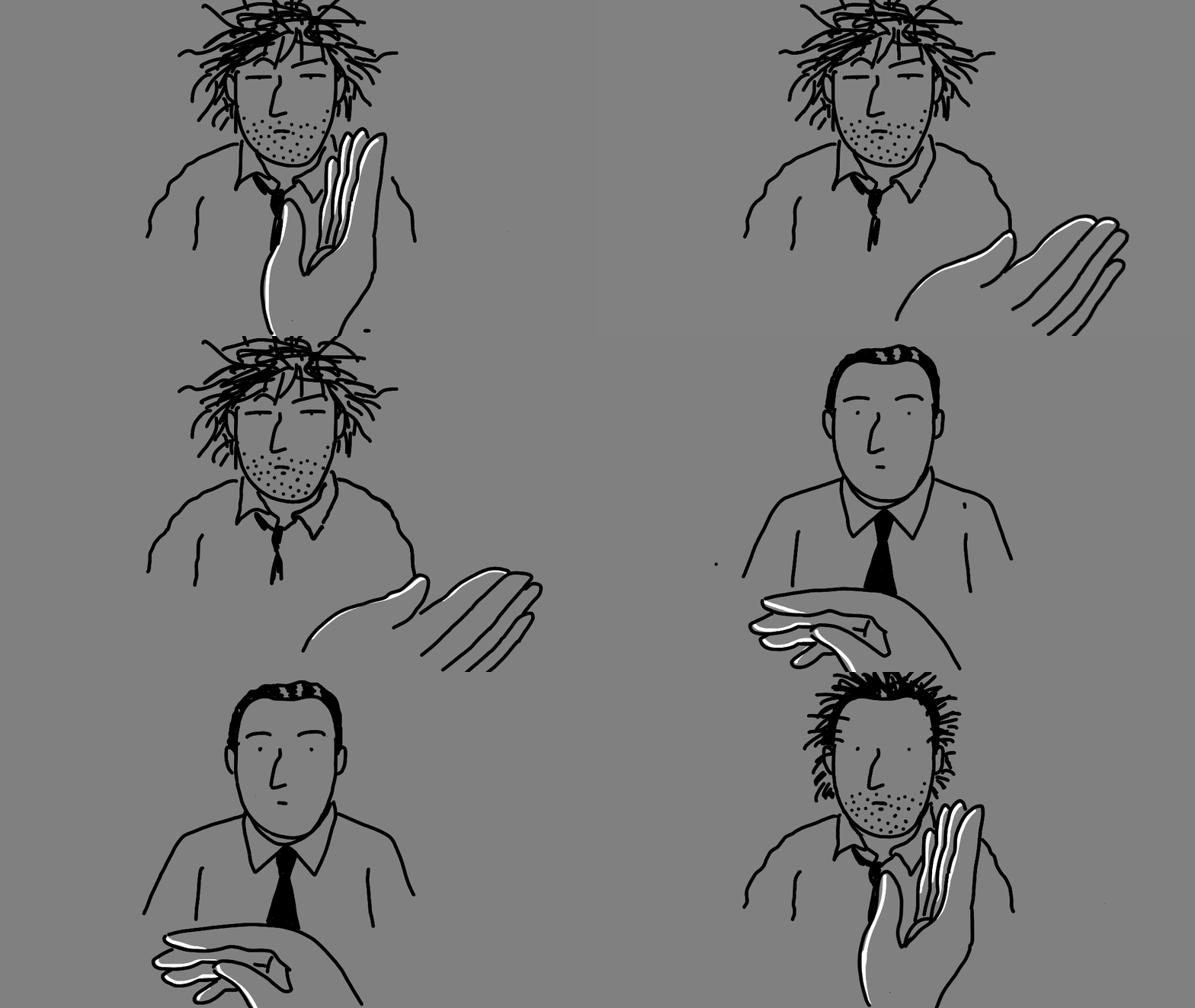
INKTOBER DAY 4: SMACK
When we have to draw an action, we usually think about the movement.
Someone hits something.
Someone throws something.
Someone pushes something.
But what if we focus on what happens after the action?
What does the action change?
How does it transform the thing we act upon?
And can that transformation be unexpected?
A smack usually has a very clear consequence.
Pain.
Damage.
Anger.
But what if the smack does something completely different?
What if instead of hurting someone, it 'fixes' them, or encourage them in some way?
This is another way to create disruption:
Don't just change the action. Change the consequence people expect from it.
And the transformation doesn't always have to be negative.
Sometimes the most interesting transformation is the one we never expected to see.
So today's tip:
Don't just draw the action. Draw the unexpected consequence.
Don’t Always Explain Your Absurdity
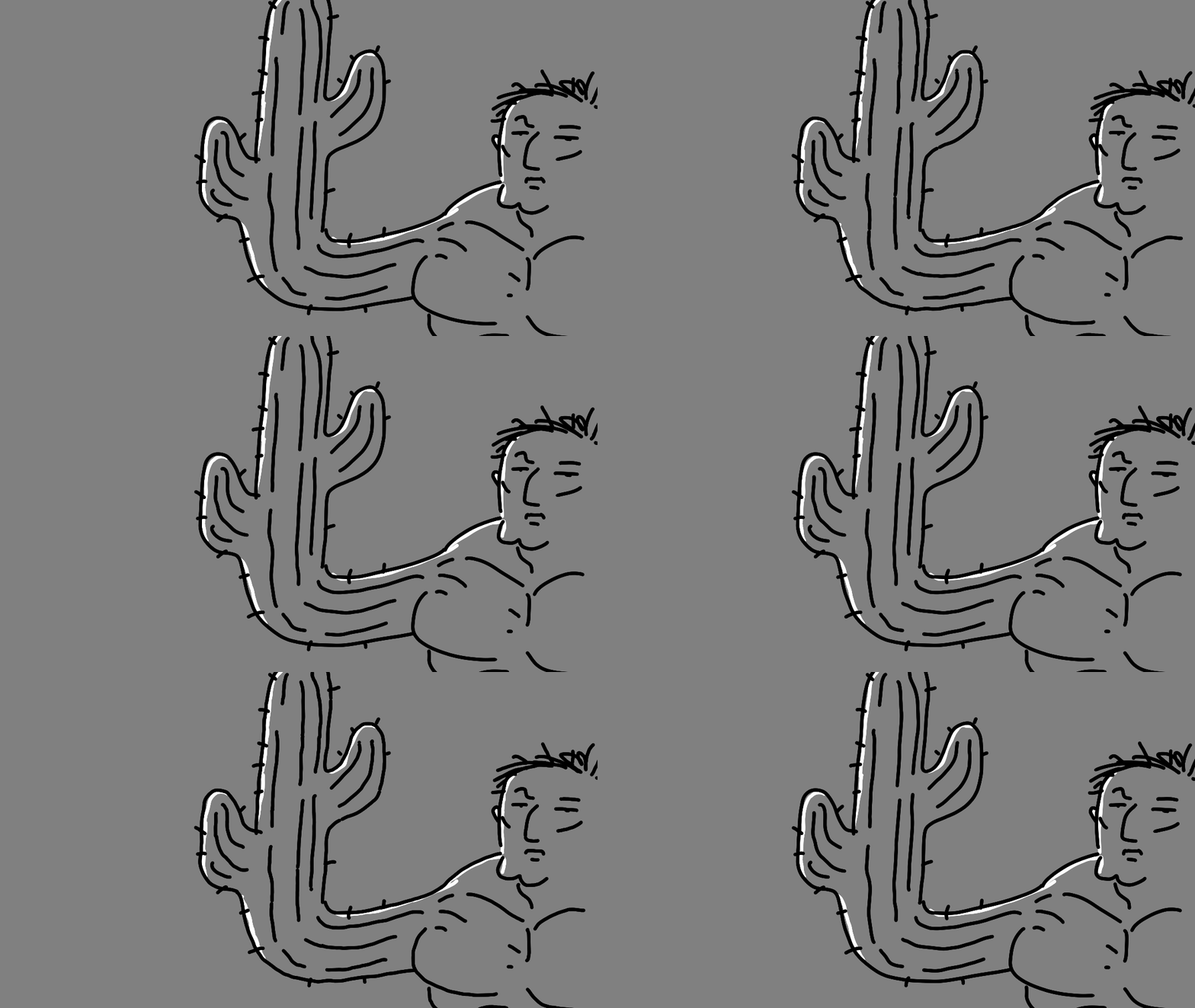
Say something without saying it.
Sometimes we create an absurd image without giving it a very specific meaning.
And then something interesting happens.
Our audience starts creating meanings for us.
This is one of the things I love about blending.
When we fuse two completely different things together, we create something that doesn't exist in the real world.
And because it doesn't exist, there is no single, obvious meaning attached to it.
The viewer has to complete the image.
They use their own culture, experiences, memories and imagination to decide what they are looking at.
And that means two people can look at exactly the same absurd image and see completely different things.
Sometimes we don't even realize all the meanings our image can suggest.
We may think:
“It's just a weird idea.”
But someone else might see something very specific.
And that's the beauty of absurdity.
You don't always have to explain everything.
Sometimes the less you say, the more space you g...
Sometimes, the concept you need to communicate needs a comparison.
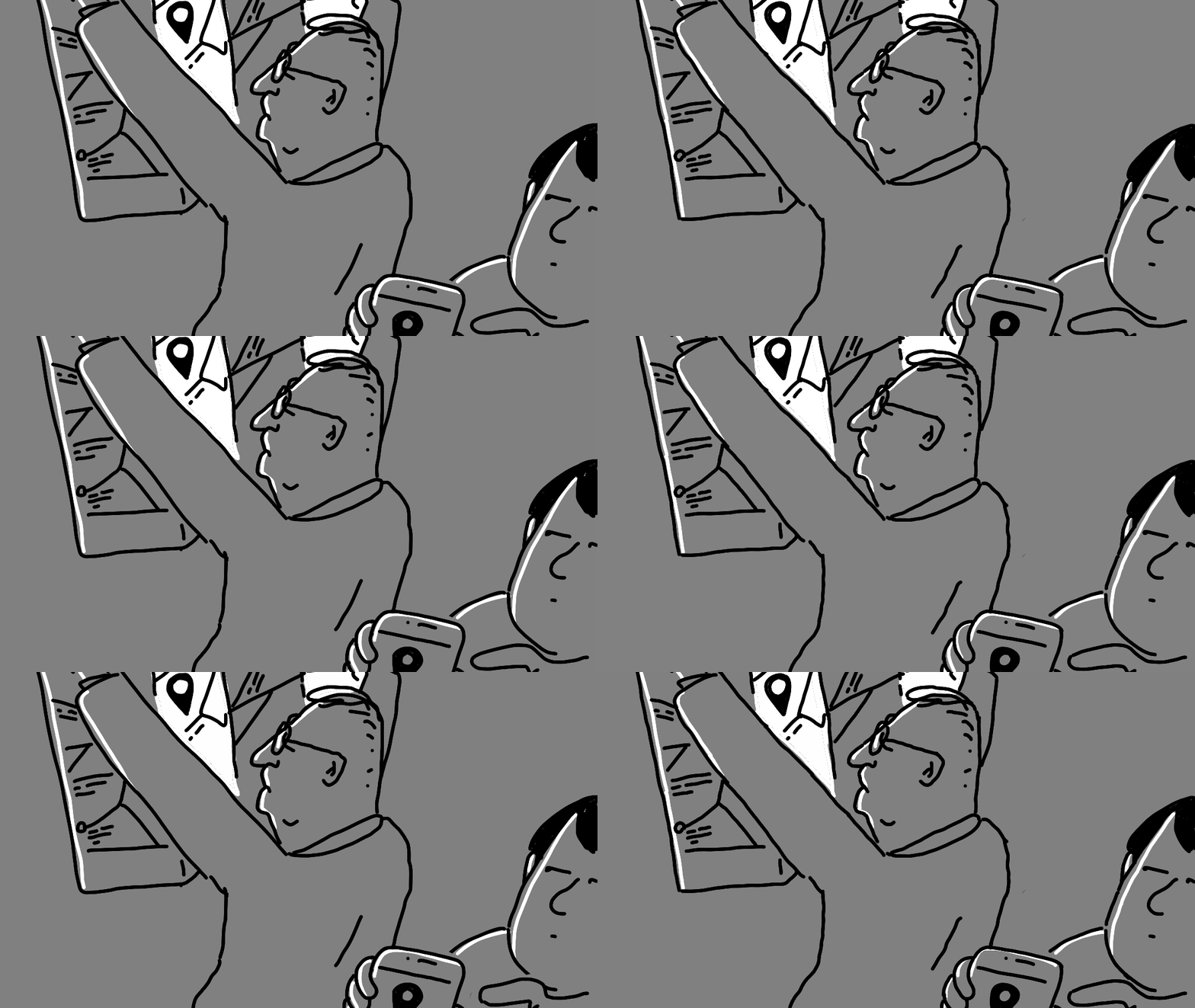
INKTOBER DAY 2: RELIC
A paper map is just a paper map.
But put it next to a smartphone with Google Maps…
Suddenly, the paper map becomes a relic.
When we compare two things, we automatically create a hierarchy between them.
We start seeing one as old and the other as new.
One as slow and the other as fast.
One as obsolete and the other as current.
But we don’t necessarily see these relationships when we look at each object on its own.
The comparison can be very simple:
One object next to another.
Or you can create a whole story around the comparison.
But remember: The more details you add to a scene, the longer it takes to decode.
So always ask yourself:
How much time will my audience have to look at this?
And design your visual accordingly.
If you want to learn more about visual metaphors and use them to strengthen your creativity, my Visual Thinking membership is open.
Use INK2026 for the special October discount.
Even when you are drawing a simple, tangible object, try to tell a story.
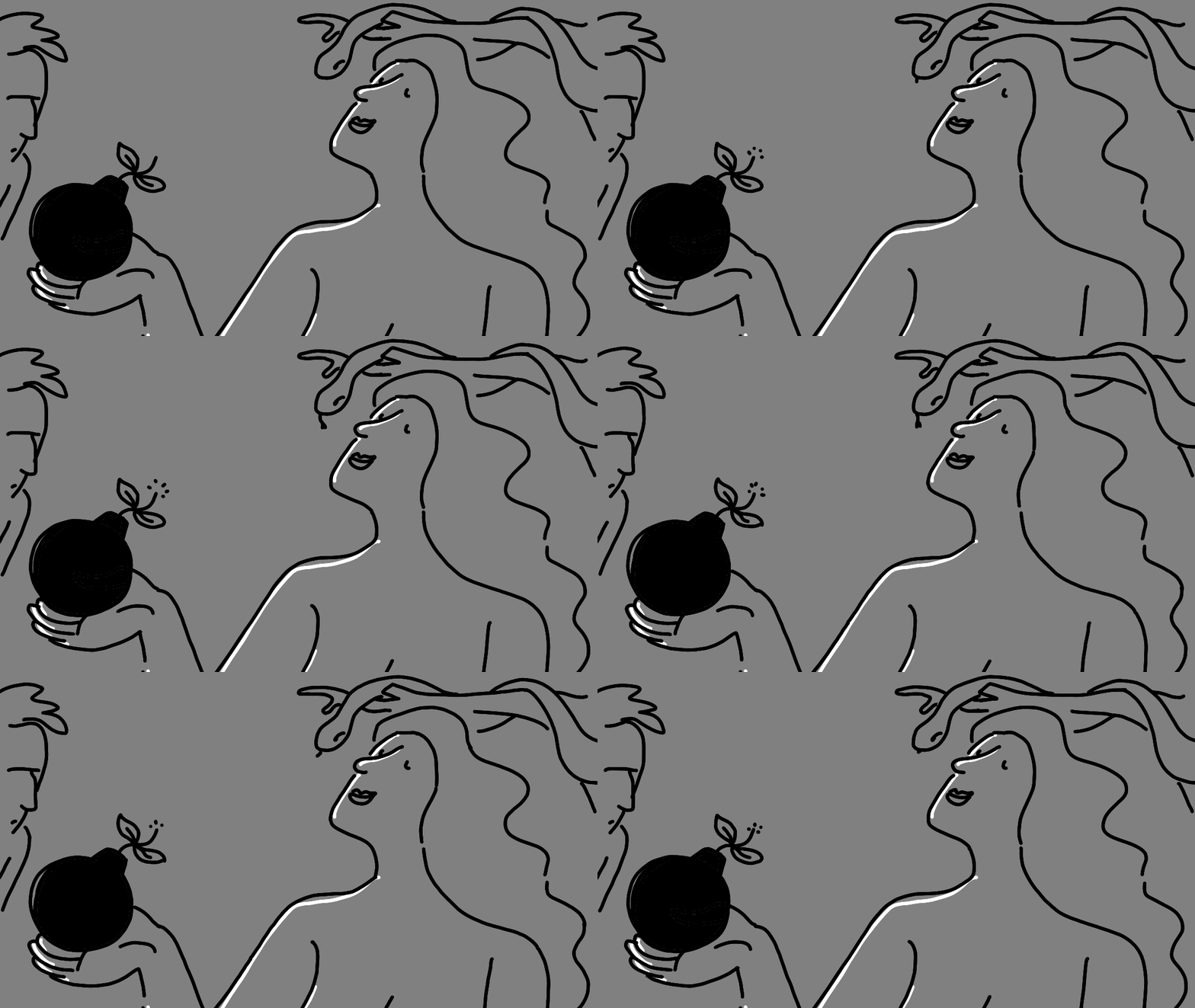
INKTOBER DAY 1: APPLE
The story can be very short. Or it can be more complex. But I believe there should always be a story and something disruptive that makes us stop.
What makes a story longer or shorter?
The number of elements you add around your main concept.
I could have simply drawn an apple. Or an apple + a bomb.
But when I add other elements that give the image context, the story becomes richer.
And now, the person looking at it needs a little more time to decode what is happening.
So, the story can be short or long. But disruption always helps.
When we see something that feels out of place, our brain wants to understand why it is there.
And that small moment of confusion can make someone stop and look a little longer.
So here is my first Inktober tip:
If you want people to spend more time looking at your image, give them something to figure out.
More tips coming
Inktober 2024: Mastering the Art of 'Drawing Attention Through Absence

Here’s another tip for your #Inktober challenge:
Remove! What if, instead of showing what you want to depict, you don’t show it?
This is called 'drawing attention through absence'.
It may sound strange, but when we omit something people expect to see, we actually draw more attention. And here is another tip:
You can add an extra layer of meaning by replacing that absence with something else.
In this case, you’re introducing two levels of disruption: the removal of an expected element (like a violin), and its replacement with something unexpected (a tongue).
Try this removal-and-replacement approach in your next #Inktober2024 drawing!
Thank you,
Dario Paniagua
Visual Thinkers Coach
Inktober 2024: Turning the Abstract into Tangible Stories

Here’s a new tip for the #Inktober challenge.
When you have to represent abstract concepts like "uncharted," the first step is to make the abstract tangible. Remember, people tend to remember and understand more easily what they can see and touch rather than purely abstract ideas.
The best way to make a concept tangible is to create a story around it.
Another tip that can help you create stories: explore unusual things. If you need to represent the concept of "uncharted," our first instinct is often to depict an uncharted territory. But what if you explored something else that's not necessarily a territory?
This ties back to one of the tips I’ve mentioned in earlier posts: explore the inside of objects or people, and then create stories around them!
As you can see, no matter how abstract the concept or how absurd the representation might seem, your visual storytelling will give meaning to the image you create.
Thank you,
Dario Paniagua
Visual Thinkers Coach
Inktober 2024: Dive Into the Depths of Your Drawings

Here’s a new tip for the Inktober challenge:
Explore the inside of things (objects, people, animals).
Anything with volume has an interior.
Imagine how you can explore it!
Can you play with its depth?
Can you alter its shape to increase capacity?
Can you place things inside?
Can you add people interacting in the newly created space?
Questions trigger ideas!
Don’t be afraid of the absurd. The absurd is the secret ingredient for telling a great story or creating a metaphorical message.
Try these tips in your next drawing for the Inktober2024 challenge!
Thank you,
Dario Paniagua
Visual Thinkers Coach
Inktober 2024: Harness the Power of Triangles in Your Drawings

Here’s a new tip for your #Inktober challenge:
Everything can be transformed into a peak, a ridge, or a mountain.
Why?
Because any figure you draw is full of geometric shapes, and triangles, in particular, are one of the most fascinating forms to explore.
Triangles also bring dynamism to an image.
They can be used as arrowheads to direct your audience’s eyes toward the key parts of your drawing that you want to highlight.
Feel free to experiment with this shape in your next #Inktober2024 drawing!
Thank you,
Dario Paniagua
Visual Thinkers Coach
Inktober 2024: Use Geometric Shapes for Engaging Drawings

Here’s a new tip for your #Inktober challenge:
Use geometric shapes!
Ask yourself this: Can I take part of an image and replace it with another object related to the message I want to communicate?
Geometric shapes can always be associated with another recognizable object that shares the same shape. This makes your images much more engaging for your audience.
Try using this technique in your next #Inktober2024 drawing!
Thank you,
Dario Paniagua
Visual Thinkers Coach
